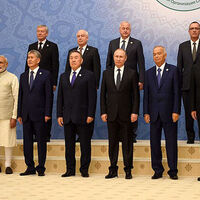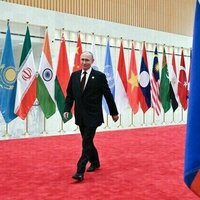


The declaration of the Shanghai Cooperation Organisation (SCO) reflected India's vision of 'One Earth, One Family, One Future' as it was adopted by the member states on Monday.
The declaration saw the member states reaffirm the relevance of initiatives to promote cooperation in building a new type of international relations in the spirit of mutual respect, justice, equality and mutually beneficial cooperation.
The Tianjin Declaration noted of the formation of a common vision of the idea of creating a community of shared future for mankind and developing dialogue on the idea of "One Earth. One Family. One Future", with the member states calling on the international community to join the SCO Initiative "On Global Unity for a Just World, Harmony and Development."
The concept of "One Earth. One Family. One Future" was given by India during its presidency of the G20 Summit in 2023. Since then it has been echoed across various global platforms.
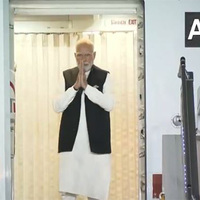
Sharing the details in a post on X, the Spokesperson of the Ministry of External Affairs (MEA), Randhir Jaiswal said, "PM @narendramodi addressed the 25th Meeting of the Council of Heads of State of the Shanghai Cooperation Organization (SCO), held in Tianjin, China. PM highlighted India's approach to strengthening cooperation under the SCO framework & sought greater action under three pillars- Security, Connectivity and Opportunity. He called upon Member countries to take firm & decisive action to fight terrorism in all its manifestations. Thanking member states for their solidarity in the wake of the Pahalgam Terror attack, he urged that there should be no double standards in fighting terrorism. The SCO Member countries adopted the Tianjin Declaration."
The SCO Declaration also saw the member states reaffirm the universality, indivisibility, interdependence and interrelatedness of all human rights, as well as their commitment to respect human rights and fundamental freedoms, and oppose the application of "double standards" in human rights issues and interference in the internal affairs of other states under the pretext of protecting them.
In order to further improve the activities of the SCO, the member states adopted the SCO Development Strategy until 2035, which defines the priority tasks and main directions for deepening multifaceted cooperation in the interests of ensuring peace and stability, development and prosperity in the SCO space.
Chinese President Xi Jinping on Monday called on the Shanghai Cooperation Organisation to uphold fairness and justice while addressing the 25th Meeting of the Council of Heads of State of the SCO.
"We must promote a correct historical perspective on World War II, and oppose the Cold War mentality, block confrontation and bullying practices," Xi said.
The SCO Summit 2025 reflects the growing importance of multipolarity in global governance as US President Donald Trump's transactional bullying alienated most of its allies.
From India and China to Russia and beyond, ancient civilizations are forging a new axis of influence built on resilience, cooperation, and multipolar ambition, the East is no longer the periphery--it is the center.
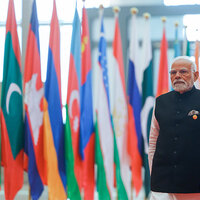
Prime Minister Narendra Modi, Chinese President Xi Jinping, and Russian President Vladimir Putin clasped hands in a show of unity--a symbolic image that underscored a changing world order.
PM Modi's meetings with President Xi Jinping and President Putin demonstrate India's efforts to balance its relations with major powers, while pursuing its national interests.
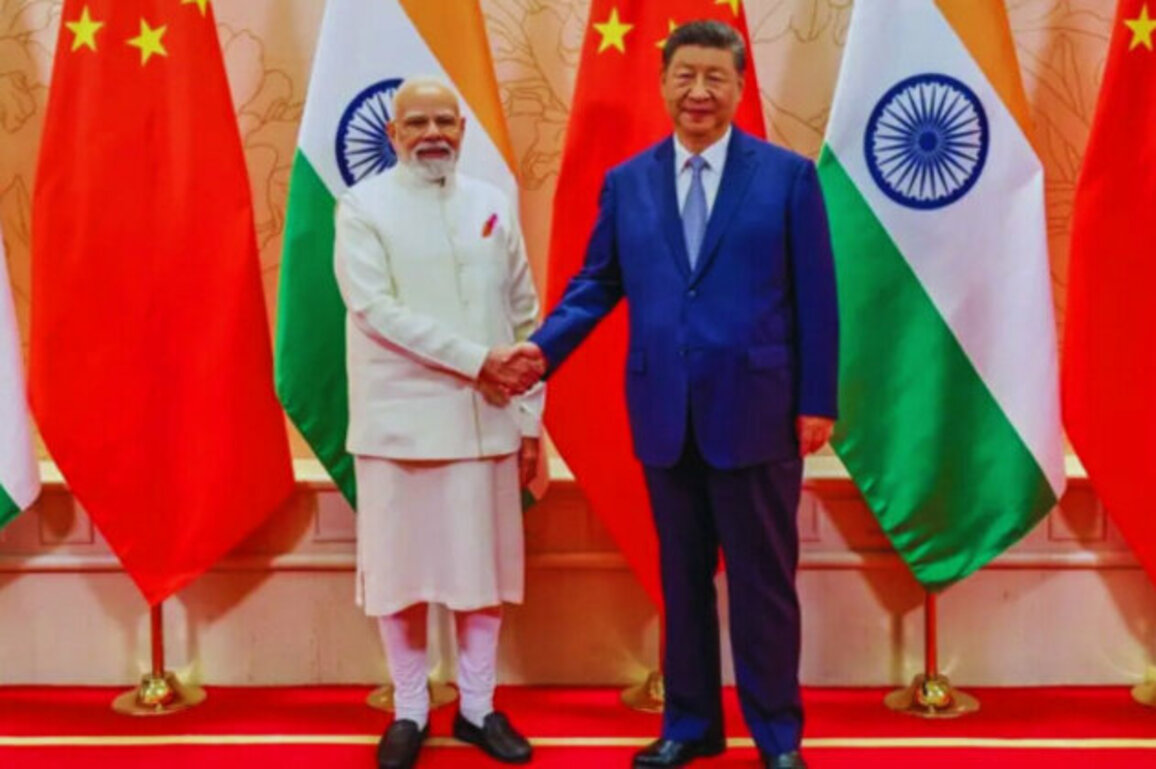
Notably, Xi Jinping and PM Modi met here on Sunday, agreeing that China and India are partners, not rivals. Xi told PM Modi that China and India are partners in each other's development opportunities rather than threats.
"As long as the two countries keep to this overarching direction, specific matters in the bilateral relations will fall into place and there will be steady and sustained progress in bilateral ties," Xi said.
Noting that this year marks the 75th anniversary of China-India diplomatic ties, Xi said the two countries need to view and handle the relationship from a strategic and long-term perspective.
While the successful meeting between Xi and Modi in Kazan last year enabled the China-India relations to have a reset and start anew, the two sides should pursue a further improvement of ties from the Tianjin meeting onward, according to the Chinese president.
Xi called on the two countries to strengthen strategic communication and deepen mutual trust, expand exchanges and cooperation to achieve mutual benefit and win-win, accommodate each other's concerns and get along in peace and harmony, and strengthen multilateral coordination to safeguard shared interests.
Xi called on the two countries to work together for a multi-polar world and greater democracy in international relations, and to make due contributions to peace and prosperity in Asia and the wider world.
Noting that India and China are partners, not rivals, and the consensus between the two countries far outweighs their disagreement, PM Modi said India is ready to view and develop bilateral ties from a long-term perspective.
"Given the great uncertainties in the world economy, it is vital for India and China to strengthen cooperation as important economies of the world," said PM Modi, adding that India-China cooperation will make the 21st century a genuine "Asian century."
Meanwhile on Monday, Xi stressed on respecting SCO differences, maintaining strategic communication, building up consensus, and strengthening solidarity and collaboration.
"SCO member states are all friends and partners. We should respect our differences, maintain strategic communication, build up consensus, and strengthen solidarity and collaboration. We should make the pie of cooperation bigger and fully utilise the endowment of every country so that we can fulfil our responsibility for peace, stability, development and prosperity in the region...," he said.
He said China and India are important members of the Global South, and shoulder the crucial responsibility of improving the well-being of the two peoples, promoting the solidarity and rejuvenation of developing countries, and advancing the progress of human society.
Xi also called for safeguarding the UN-centered international system, and supporting the multilateral trading system with the WTO at its core.
The Chinese President also called on SCO member states to champion openness and inclusiveness. "SCO member states need to enhance mutual understanding and friendship through people-to-people exchanges, firmly support one another in economic cooperation, and jointly cultivate a garden of civilisations in which all cultures flourish in prosperity and harmony through mutual enlightenment," Xi said.
The Chinese President also called on SCO member states to pursue mutual benefit and win-win results and leverage the strengths of their mega-sized markets and economic complementarity between them and improve trade and investment facilitation.
"We need to better align our development strategies and promote the high-quality implementation of the Belt and Road Initiative," Xi said.
SCO has emerged as an organisation with increasing clout and global recognition. Founded in Shanghai in June 2001, the SCO has expanded from six founding members into a 26-nation family of 10 members, two observers and 14 dialogue partners spanning Asia, Europe and Africa.
With major emerging markets and developing countries such as China, Russia and India among its members, the SCO represents nearly half of the world's population and a quarter of the global economy, standing as a key pillar of regional stability and practical cooperation.
During his remarks at the plenary session of the SCO Summit, Prime Minister Narendra Modi highlighted that India's vision for Shanghai Cooperation Organisation (SCO) is guided by three pillars, namely Security, Connectivity and Opportunity. He brought to attention the importance of security, peace and stability towards the growth of countries, India's connectivity endeavours for Afghanistan and Central Asia, and suggested the creation of a Civilisational Dialogue Forum to bring to the world cultural aspects of SCO member countries.
The SCO Summit is taking place in the port city of Tianjin this year. Comprising 10 member countries in addition to India, SCO includes Belarus, China, Iran, Kazakhstan, Kyrgyzstan, Pakistan, Russia, Tajikistan, and Uzbekistan. There are also several dialogue partners and observers.
India has been a member of the SCO since 2017, after having been an Observer since 2005.During its membership period, India has held the chair of the SCO Council of Heads of Government in 2020, and of the SCO Council of Heads of State from 2022 to 2023.
India, as the chair of SCO, had articulated its priorities as moving towards a 'Secure' SCO - Security, Economic Development, Connectivity, Unity, Respect for sovereignty and territorial integrity, and Environmental protection.
India had also directed the cooperation in SCO towards five new verticals like Startups and Innovation, Traditional Medicine, Science and Technology, Youth Empowerment and Shared Buddhist Heritage.
In the course of its Presidency of SCO in 2022-2023, New Delhi worked on a diverse range of themes to give a new dynamism to the multifaceted cooperation and in many areas opened up new vistas of cooperation to meaningfully enrich SCO's agenda.